
AI-Integrated Robotics & Autonomous Systems
AERISE / AI-Integrated Robotics & Autonomous Systems
Intelligence that
moves into action.
From recognising an object to navigating a workspace or managing multiple drones, AERISE connects AI, robotics and mission software around the task you need to accomplish.
Watch our robotics demonstration ↓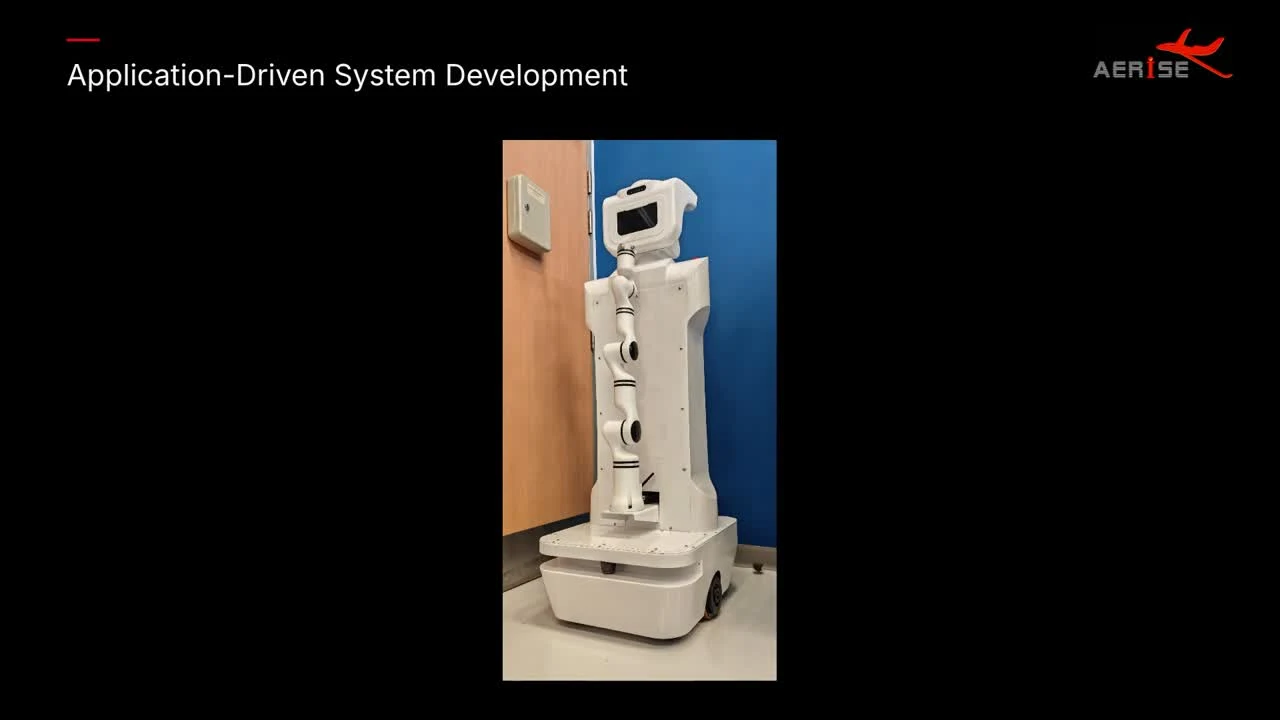
01 / Perceive · Act · Coordinate · Integrate
Engineering Capabilities
Built Around the Mission.
Start with the outcome. We bring together visual intelligence, autonomous mobility, multi-drone management and system interfaces to build the capabilities your project requires.
AI-Integrated Robotics
Recognise the objects that matter to the task. We integrate YOLO-based visual recognition, onboard computing and task logic so perception can inform the robot’s next action.
Navigation & Mobile Manipulation
Bring map-based localisation, destination navigation and object handling into your application. Integrate an AMR, robotic arm and gripper around tasks that require movement and manipulation.
Drone Traffic & Mission Management
Manage multiple drones through mission scheduling, airspace and route management, and conflict detection. Give operators a structured way to plan and oversee fleet activity.
Unified Protocol & System Integration
Connect task applications and robot platforms through the AERISE Generic Protocol. Bring commands, platform state and execution feedback into a common integration layer.
02 / Act · A working demonstration
Navigate to the task.
Recognise the target. Pick it.
See our modular mobile manipulation system in action: an AMR for map-based movement, YOLO for target recognition, and a robotic arm with a gripper for object handling.
AERISE modular mobile manipulation · AMR + robotic arm + gripper · 66 seconds
Reach the destination.
The AMR uses a real-time map to localise and navigate to the required location.
Select the right object.
YOLO-based recognition determines whether the visible object matches the intended target.
Perform the grasp.
The robotic arm and gripper carry out the object-grasping task.
03 / Coordinate · Unmanned aircraft operations
From individual flights
to managed drone operations.
AERISE’s Drone Traffic Management capabilities bring mission scheduling, airspace and route management, and conflict detection into multi-drone operations.
Organise the work.
Schedule missions and task assignments across multiple drones.
Structure the operation.
Manage flight routes and operating airspace around the mission requirements.
Make potential conflicts visible.
Identify potential conflicts between drone operations to support planning and operator decisions.
Fleet configuration, communications and operational validation are defined for each project.
04 / Integrate · AERISE Generic Protocol
One integration layer.
A clearer path from task to robot.
Our own Generic Protocol connects task commands, platform state and execution feedback. Project-specific adapters link the application to the robot, while operator interfaces make the system’s actions and responses accessible to your team.
Task commands flow to the robot. State and execution results return to the application.
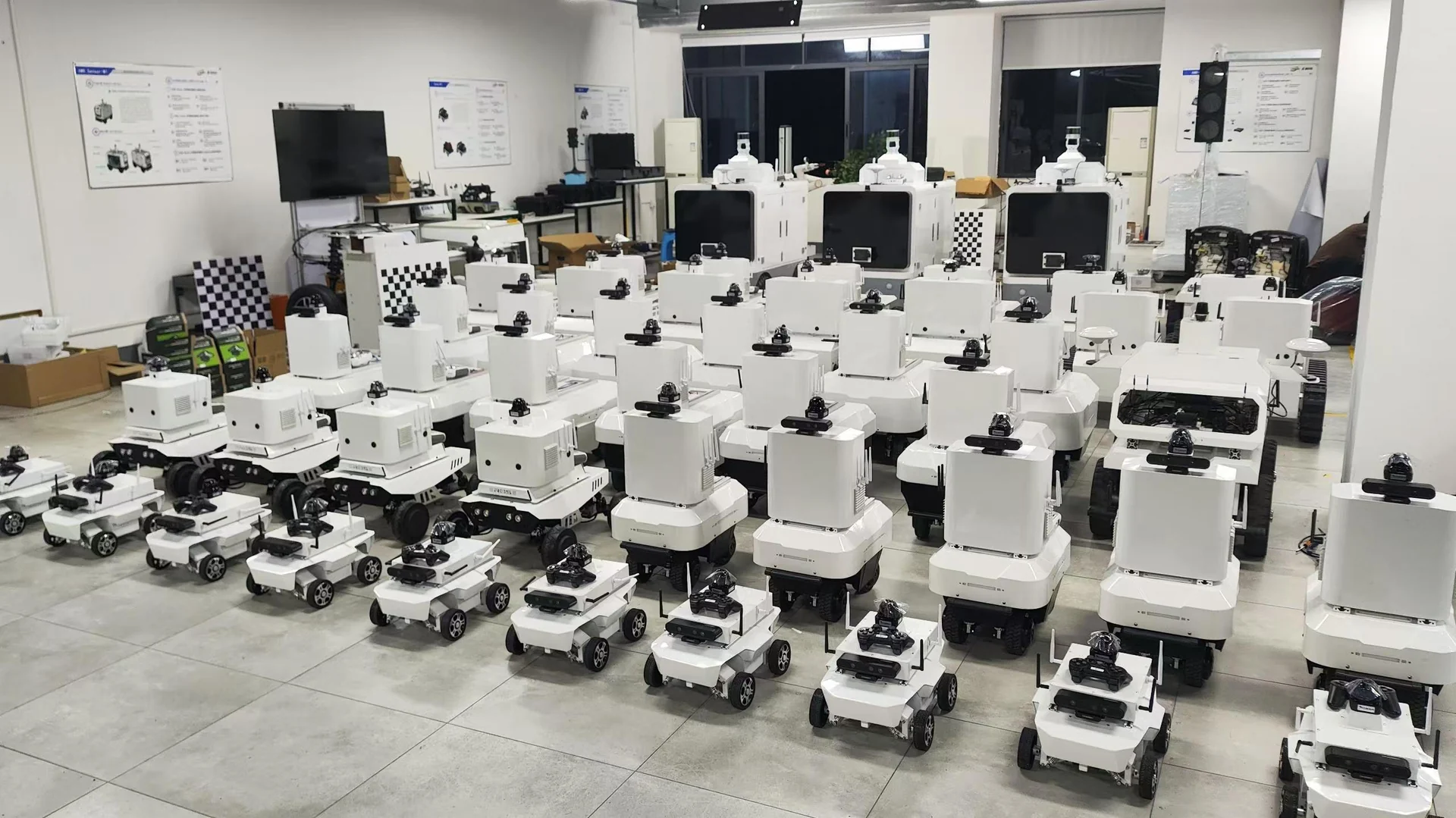
Engineering in practice
Built on real
project experience.
Our university fleet delivery includes ground robots in different configurations. It reflects the practical platform engineering behind our systems work.
We integrate hardware, sensing, computing and software around the equipment and task requirements of each project.
Explore robot platforms ↗Bring us your mission
What do you need
your system to achieve?
Share the task, operating environment and platforms you have in mind. We’ll define the integration scope, required interfaces and validation plan with your team.
Final functions depend on platform compatibility, sensing, computing, communications and project validation. Operating boundaries, including geofencing, can be scoped where required.